Bakit Mahalaga ang Pag-alam sa Mga Pangalan ng Bahagi ng Tagapangulo
Nag-aayos ka man ng sirang bahagi, nag-o-order ng kapalit na bahagi, o nakikipag-ugnayan sa isang tagagawa ng muwebles, ang pag-alam sa mga tamang pangalan para sa mga bahagi ng upuan ay nag-aalis ng kalabuan at nakakatipid ng oras. Ang isang "seat cushion" at isang "seat pan" ay magkaibang bahagi; ang isang "silindro ng gas" at isang "base ng upuan" ay nagsisilbi sa iba't ibang mga function. Nalalapat ang tumpak na terminolohiya sa mga uri ng upuan — Ang mga upuan sa opisina, mga upuan sa kainan, mga recliner, at mga bar stool ay nagbabahagi ng maraming mga bahagi ng istruktura ayon sa pangalan kahit na ang kanilang mga disenyo ay may malaking pagkakaiba.
Ang seat is the primary load-bearing surface and consists of several distinct parts:
- Seat pan (seat shell): Ang structural base of the seat — typically moulded plastic, plywood, or formed steel — that supports the cushioning and upholstery above it. When a seat cushion is removed, the seat pan is what remains.
- Seat cushion (seat pad): Ang foam, fibre, or spring-supported upholstered layer on top of the seat pan that provides comfort. In dining chairs this is often a single removable pad; in office chairs the foam is typically bonded to the seat pan and covered in fabric or mesh.
- Foam ng upuan: Ang internal padding material, most commonly polyurethane foam rated by density (kg/m³) and ILD (Indentation Load Deflection, a measure of firmness). Higher-density foam — higit sa 45 kg/m³ — lumalaban sa compression fatigue na mas mahaba kaysa sa economic-grade foam sa matagal na pang-araw-araw na paggamit.
- Upholstery ng upuan (takip ng upuan): Ang fabric, leather, vinyl, or mesh covering that wraps the seat cushion. Attached by staples, clips, or a slip-on cover depending on the chair design.
- gilid ng talon: Isang tampok na disenyo kung saan ang harap na gilid ng upuan ay kurbadang pababa sa halip na magtatapos sa isang matigas na tamang anggulo. Binabawasan ang presyon sa likod ng mga tuhod sa panahon ng pinahabang pag-upo at isang pinangalanang detalye sa mga ergonomic na upuan sa opisina.
Ang Backrest Assembly
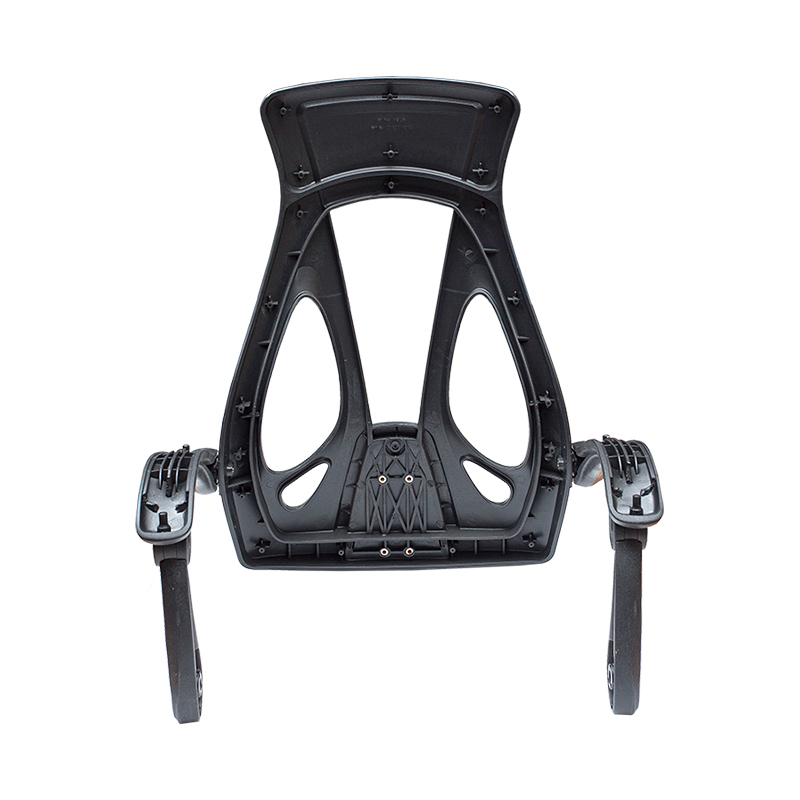
- Sandalan (panel sa likod): Ang vertical surface that supports the sitter's back. In upholstered chairs this is a padded panel; in office chairs it is often a mesh-stretched frame or moulded plastic shell.
- Suporta sa lumbar: Isang contoured protrusion o adjustable pad sa ibabang bahagi ng backrest na sumusuporta sa lumbar curve ng spine. Sa mga premium na ergonomic na upuan, ang lumbar support ay independiyenteng nababagay sa taas at lalim.
- Headrest (neck rest): Isang extension sa itaas ng pangunahing backrest na sumusuporta sa ulo at leeg. Karaniwan sa mga high-back executive chair at nagiging standard sa ergonomic task chair. Maaaring maayos o adjustable sa taas at anggulo.
- Back upholstery: Ang covering material on the rear-facing surface of the backrest. On many chairs the rear face uses a different, less expensive material than the front since it is not in contact with the user.
- back frame: Ang internal structural skeleton of the backrest — typically steel rod, aluminium extrusion, or moulded plastic — to which upholstery or mesh is attached. Visible on wire-frame and exposed-frame chair designs.
Mga Armrest at Ang mga Bahagi Nito
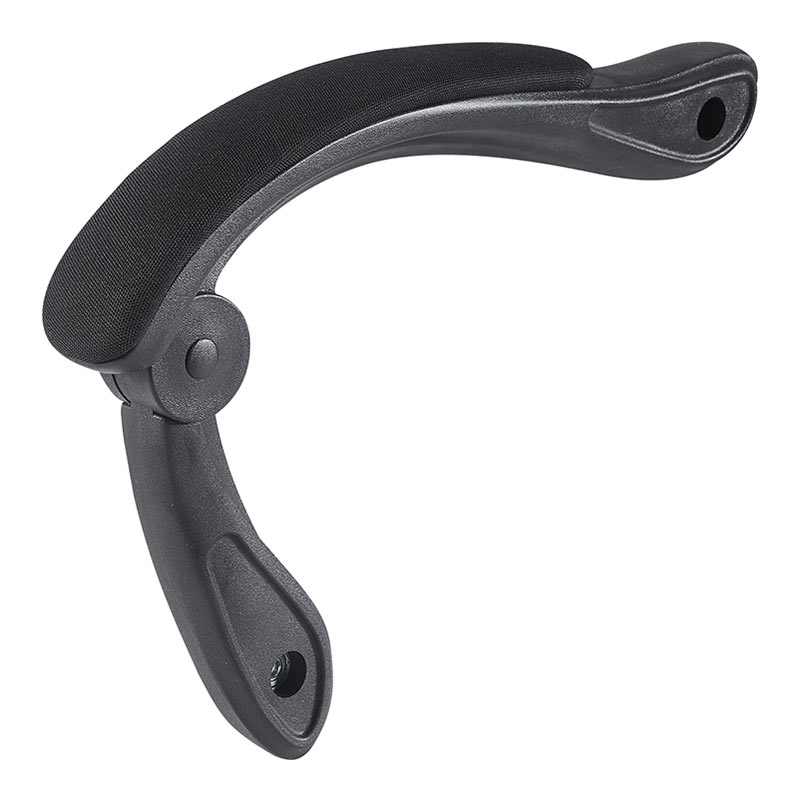
- Armrest (braso): Ang horizontal surface on which the user rests their forearm. May be fixed or adjustable. Described by their adjustment axes: height-adjustable (1D), height at width-adjustable (2D), height, width at pivot-adjustable (3D), o height, width, pivot at depth-adjustable (4D) .
- Arm pad (armrest pad): Ang cushioned or padded top surface of the armrest that contacts the forearm. Often replaceable as a separate part; common materials include PU foam, PVC, gel, and fabric.
- Bracket ng braso (suporta sa braso): Ang structural bracket connecting the armrest to the seat pan or chair mechanism below. Usually steel or reinforced nylon.
- I-flip-up na braso: Isang armrest na idinisenyo upang tiklop pataas, na karaniwang tinutukoy sa mga upuang ginagamit sa pangangalagang pangkalusugan, edukasyon, at mga kapaligiran sa silid ng pagsasanay kung saan madalas na kailangan ang access mula sa gilid.
Ang Chair Mechanism and Height Adjustment
Sa mga upuan sa opisina at gawain, ang interface sa pagitan ng upuan at base ay naglalaman ng mga mekanismo ng pagsasaayos at paggalaw na nakikilala ang isang ergonomic na upuan mula sa isang static:
- Mekanismo ng upuan (mekanismo ng ikiling, mekanismo ng kontrol): Ang metal plate assembly mounted beneath the seat pan that controls tilt, recline, and rocking functions. The mechanism housing contains the tension spring, lock, and pivot points. Common types include single-lever, multi-function, synchronised tilt (where the seat and backrest tilt in a defined ratio), and free-float mechanisms.
- Silindro ng gas (pneumatic cylinder, gas lift): Ang spring-loaded nitrogen-filled cylinder connecting the mechanism to the chair base that provides height adjustment. Pressing the seat height lever releases the valve; body weight compresses the cylinder to lower the seat, and removing body weight allows the nitrogen pressure to raise it. Standard cylinders provide a 100–150 mm hanay ng pagsasaayos ng taas ; ang mga matataas na cylinder ay nagpapalawak nito sa 200 mm o higit pa.
- Tension knob (tilt tension adjuster): Isang knob, kadalasang matatagpuan sa ilalim ng upuan sa harap, na nag-a-adjust sa spring resistance ng tilt mechanism — na nagpapahintulot sa mas mabibigat o mas magaan na user na itakda ang recline effort sa kanilang kagustuhan.
- Ikiling ang lock lever: I-lock ang backrest sa patayo o isang napiling reclined na posisyon. Ang pag-release ng lock ay nagbibigay-daan sa libreng tumba o recline.
Ang Base, Legs, and Caster Assembly
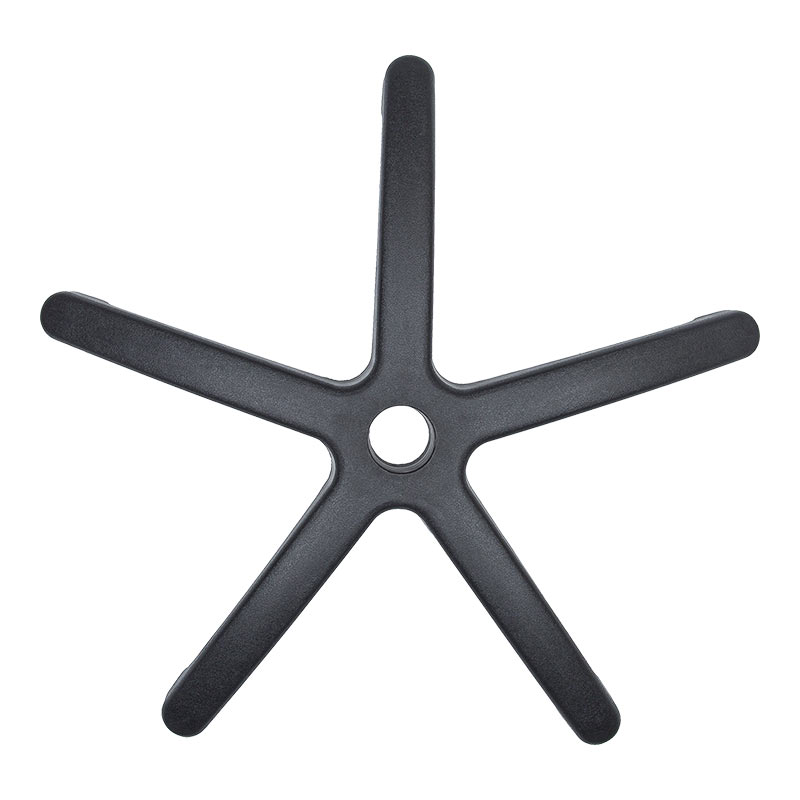
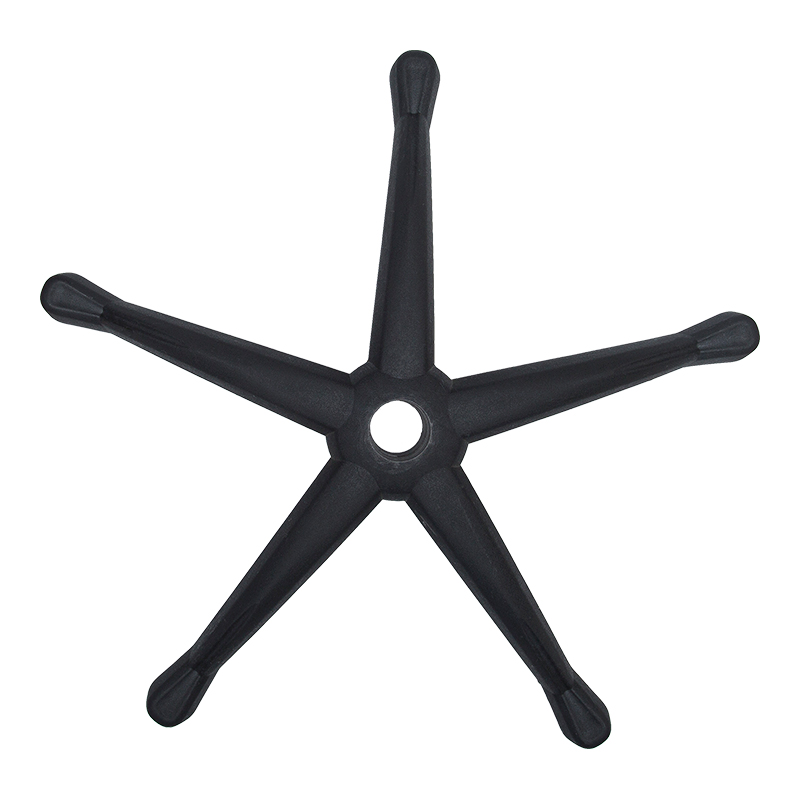
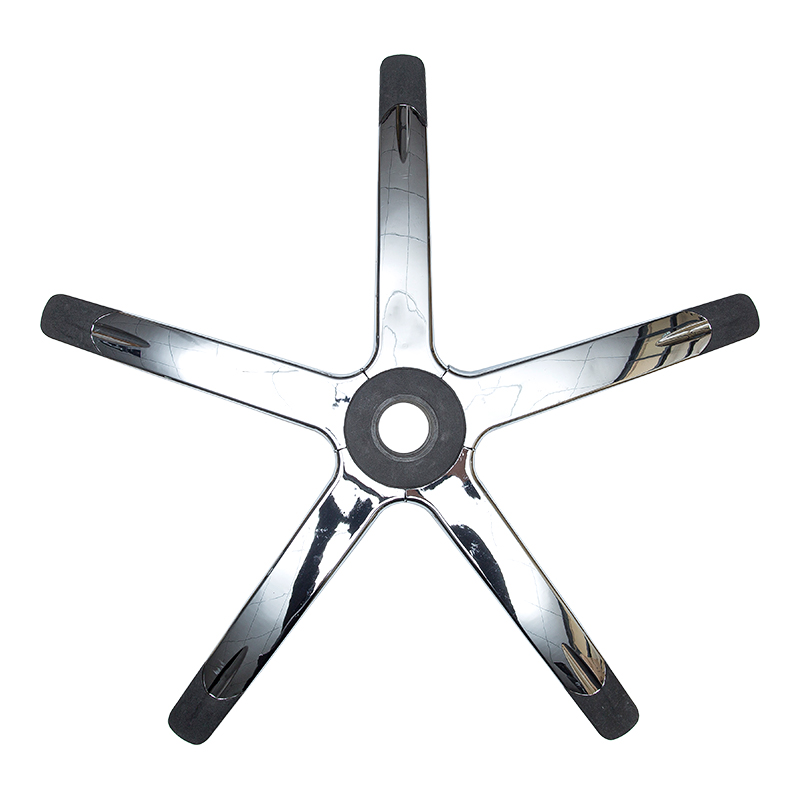
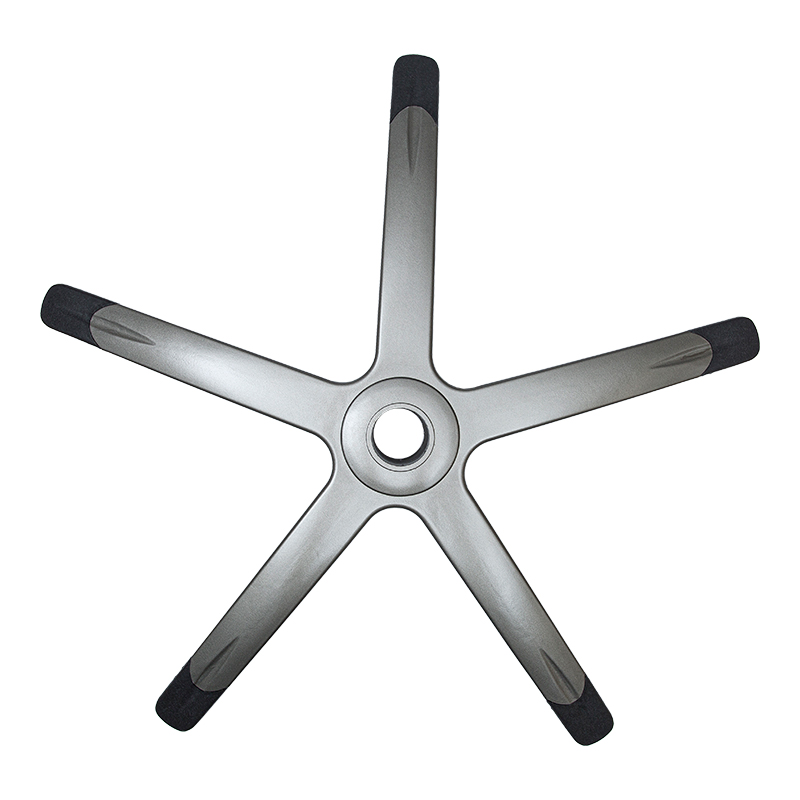
- Base ng upuan (star base, five-star base): Ang radial support structure at the bottom of an office chair, typically with five arms extending from a central hub. A five-point base is the industry standard for stability — Ang apat na puntong base ay likas na hindi gaanong matatag at bihirang ginagamit sa propesyonal na upuan. Ang mga base ay gawa sa naylon (puno ng salamin para sa lakas), aluminyo na haluang metal, o bakal.
- Base braso (base leg, base ray): Ang bawat indibidwal na braso ay nagmula sa center hub ng star base. Tinutukoy ng bilang at haba ng base arm ang footprint at tipping resistance ng upuan.
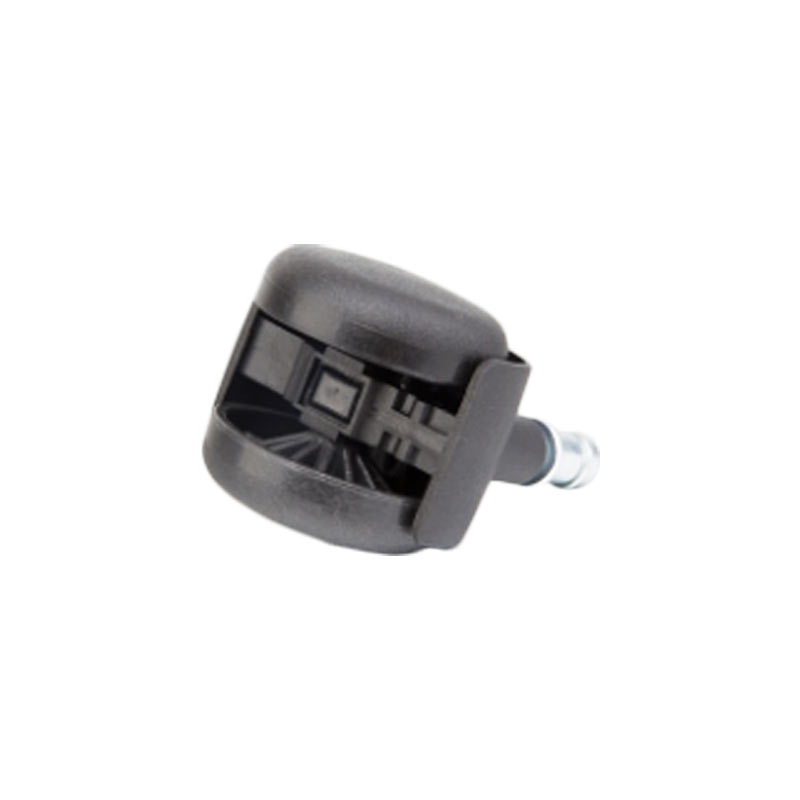
- Caster (castor, gulong ng upuan sa opisina): Ang wheeled assembly at the tip of each base arm that allows the chair to roll. Each caster consists of a wheel (or twin wheels), a housing, a stem, and a swivel bearing that allows 360° rotation. Caster wheel materials include nylon (hard, for carpeted floors), polyurethane (soft, for hard floors), and rubber.
- Caster stem (caster post, caster pin): Ang vertical pin on the caster that inserts into the socket in the base arm to secure the caster. The most common type is the grip ring stem (tinatawag ding friction stem) — isang plain cylindrical pin na may spring-clip ring na nakakandado nito sa socket. Dapat tumugma ang diameter at haba ng stem sa base socket; ang pinakakaraniwang sukat ay 11 mm diameter × 22 mm ang haba (tinatawag ding 7/16 in stem).
- Glide (paa glide, paa ng upuan): Isang hindi gumulong na plastic o rubber cap na umaakma sa base arm socket bilang kapalit ng caster. Ginagamit sa matitigas na sahig kung saan hindi ninanais na gumulong, o sa mga upuan na nilayon para sa nakapirming pagkakalagay.
Mga Pangalan ng Bahagi ng Dining at Side Chair
Ang mga non-rolling na upuan ay nagbabahagi ng maraming upuan at sandalan sa mga upuan sa opisina ngunit may sariling istrukturang bokabularyo para sa leg assembly:
- Mga binti sa harap / likurang binti: Ang vertical structural members supporting the seat at front and back. On traditional wooden chairs, rear legs typically extend upward to form the back stiles.
- Stile (likod na poste, pabalik patayo): Ang vertical side members of the backrest frame. On a ladder-back or Windsor chair, the stiles are the two vertical posts that define the sides of the back.
- Riles (cross rail, stretcher): Pahalang na mga miyembro na nagkokonekta sa mga binti upang magbigay ng structural rigidity. A riles ng upuan nag-uugnay sa mga binti sa ibaba lamang ng antas ng upuan; a likod ng tren ay ang pahalang na miyembro na sumasaklaw sa mga stiles. Ang mga stretcher ay lower-level horizontal braces sa pagitan ng mga binti.
- Splat: Ang central vertical decorative and structural panel in the middle of a chair backrest — characteristic of traditional and Queen Anne style chairs. Shaped and carved splats are a primary identifier of antique chair styles.
- Apron (apron sa upuan, palda): Ang horizontal panel running around the perimeter of the seat frame between the tops of the legs, concealing the seat construction and providing structural rigidity to the leg-to-seat joint.
- Takip ng paa (takip ng paa, glide ng paa): Isang plastic, goma, o felt cap na nilagyan sa base ng bawat binti upang protektahan ang ibabaw ng sahig at maiwasan ang paghati ng binti sa matitigas na sahig.


 En
En
 Home / Balita / Balita sa industriya / Mga Pangalan ng Bahagi ng Upuan: Isang Kumpletong Gabay sa Bawat Bahagi



